

General Information


Trust, Transparency & Transformation: Governing Artificial Intelligence
As the world enters the fifth industrial age, transforming the public sector has become an urgent priority. This shift necessitates innovative strategies to ensure that public servants are aptly trained in privacy and security issues. This adaptation is critical as we continue to accelerate our move to digital platforms, where safeguarding personal data is paramount.
The 28th Annual Victoria International Privacy & Security Summit, hosted at the Victoria Conference Centre, is poised to be a cornerstone event in this transformation. This fully in-person summit will welcome up to 1,000 professionals involved in public sector transformation, security, and privacy, offering them a unique opportunity to discuss how we securely live, work, and play in the digital era.
This year’s summit will highlight, “Trust, Transparency & Transformation: Governing Artificial Intelligence,” and will spearhead the intellectual odyssey. This summit brings together visionaries, experts, and innovators to explore the intricate intersection of advanced artificial intelligence with critical privacy and security imperatives.
Keynote sessions, interactive workshops, and collaborative panels will unravel the complex challenges and opportunities ushered in by our digital age. Participants will gain insights into creating strategies that seamlessly integrate AI advancements with an unwavering commitment to individual rights, data sovereignty, and technological trust.
Training public servants on issues of privacy and security is emphasized throughout the summit. The event aims to provide attendees with practical strategies to protect data effectively, ensuring that as digital platforms proliferate, the public sector continues to uphold trust and integrity.
Join us in charting a course towards a harmonious future, where the transformative potential of AI aligns with our steadfast commitments to privacy and security.
CPD/CPE Credits
We are proud to announce that delegates within local government and professionals in the industry can obtain CPD/CPE credits through The BC Law Society and various other organizations.
We acknowledge that gaining approval to attend training conferences can be challenging. As support in your continued privacy and security education, please click here for a sample Justification letter you can customize to build your case in attending. Once you click on the link, select “File” in the upper left corner, and download to edit.
Registration Information
Early Bird Rates (until December 31st)
| Public Sector | Private Sector | |
| VIPSS 3-Day Pass (Victoria Conference Centre) |
$495.00CAD (plus GST) | $795.00 CAD (plus GST) |
Standard Rates (starting January 1st)
| Public Sector | Private Sector | |
| VIPSS 3-Day Pass (Victoria Conference Centre) |
$650.00 CAD (plus GST) | $995.00 CAD (plus GST) |
If you are a post-secondary student please inquire about our special student rate. If you have a group of 10+ individuals looking to attend please reach out regarding group discounts.
Please note we have 25 complimentary student tickets available sponsored by BC Freedom of Information & Privacy Association so please contact us if you would like one – *SOLD OUT*
Registration Includes*:
- Join us live in Victoria, B.C for our 3-day summit (March 3-5, 2026) – includes the pre-summit educational workshop day on March 3rd (no lunch served this day).
- Collaborate with senior executives who are changing the privacy & security industry
- Signature keynotes and concurrent keynotes by international subject matter experts in privacy & security
- Concurrent panel sessions + interactive in-person Q & A
- Unparalleled in-person networking via 1:1 meetings and small group conversations
- Exhibit booths for our top tier sponsors
- Lunch (March 4th & 5th) and coffee breaks (March 3-5)
*Subject to provincial guidelines (masks are currently optional).
Social Media
Stay connected and engaged in the conversation leading up to and during the summit by following along on X (Twitter) @VIPSSummit. Use the event hashtag #VIPSS and #VIPSS26 in your tweets to add to the existing discussions. We would appreciate you sharing your voice with our other followers.
Please join us on Bluesky and follow our new account for Reboot Communications
Victoria Conference Centre
There’s nowhere in the world like Victoria. It’s small yet sophisticated; a technology leader and an historic capital city; a vibrant business community yet surrounded by nature. At its heart is the Victoria Conference Centre – an exceptional experience for delegates and world-class support for planners.
Victoria Conference Centre
720 Douglas Street
Victoria, BC
V8W 3M7

Keynote Speakers
















Speakers





































































































*Invited Speaker
Click on the date of the agenda you would like to view. Please note the timezone listed on the agenda.
Tuesday, March 3, 2026
9:00 - 10:30am PST • Theatre
Session 1A - Concurrent Workshop by Cisco: Prescriptive Based Response is Kryptonite to Adversaries
This immersive, hands-on lab experience will focus on developing key skills for investigating and responding to cyber incidents. Participants will learn practical techniques for identifying, analyzing, and responding to sophisticated advanced persistent threats (APTs) using Extended Detection & Response (XDR). The strategies and skills gained will be broadly applicable across a range of tools and environments. Learn how to empower your teams to go from endless investigation to remediating the highest priority incidents with greater speed, efficiency, and confidence. The session will be 80min lecture and then 10min to ensure everyone has access to the labs. The labs will be available to all attendees for up to 7 days. If you complete the labs, you will also get CPE credits. Please ensure you bring your laptops.
9:00 - 10:30am PST • Oak Bay Room
Session 1B - Concurrent Workshop by OIPC BC: Surveillance in the Public and Private Sector
In this 3-part workshop facilitated by staff of the Office of the Information and Privacy Commissioner for BC, the workshop facilitators will first walk participants through the basics of how BC’s Freedom of Information and Protection of Privacy Act and Personal Information Protection Act apply to surveillance projects. In the second part, participants will break into small groups to discuss potential ideas for surveillance projects, and how FIPPA or PIPA might apply. Then, for the last part, the session leads will bring the group back together for a dialogue where participants can share what they learned, ask questions, and offer suggestions for future tools and guidance from the OIPC.
9:00 - 10:30am PST • Saanich Room
Session 1C - Concurrent Workshop by Ministry of Citizens' Services: Cybersecurity and Digital Trust Branch: Engaging People Early: Working Openly in Cybersecurity Policy
This workshop shows how to do policy work in the open for cybersecurity—shifting from a closed, step‑by‑step process to sharing early drafts, involving people sooner, and improving the work through regular feedback. Through real examples and a short storyboard exercise, participants will see how this approach builds engagement, speeds iteration, and leads to clearer, more practical policies, especially when new technologies don’t fit what we have today.
9:00 - 10:30am PST • Esquimalt Room Presentation Files 1D - Brian Lenahan
Session 1D - Concurrent Workshop: Quantum Technologies: The Privacy & Security Threat – And the Path to Quantum Readiness
This workshop is designed for cybersecurity professionals, privacy officers, risk managers, compliance leaders, and executives concerned with emerging threats. It demystifies quantum technologies while focusing on their direct implications for data privacy, encryption security, cyber risk, and organizational resilience in a post-quantum world.
Presentation Files 1D - Brian Lenahan
10:30 - 10:45am PST • First Floor Foyer
Morning Coffee Break
10:45am - 12:15pm PST • Theatre Presentation Files 2A - Tim Wostradowski
Session 2A - Concurrent Workshop by Fortinet: Protecting AI in 2026: What Broke, What Changed, and What Actually Works Now
AI is no longer a single tool, a single model, or a single risk. In 2026, organizations are operating across multiple models, local and cloud inference, agentic workflows, embedded copilots, and automated toolchains - often without realizing how exposed they’ve become.
This workshop skips AI 101 and focuses on what security leaders actually need to know now. We’ll break down how AI usage has fundamentally changed over the past four years, why many traditional security recommendations are just the start, and where new risks are emerging - from shadow agents and model sprawl to adversarial prompts and AI supply chain exposure.
Attendees will gain a clear, conceptual guide for protecting AI usage across people, models, agents, data, and tools - without blocking innovation or pretending AI can be “turned off.”
Presentation Files 2A - Tim Wostradowski
10:45am - 12:15pm PST • Oak Bay Room Presentation Files Workshop 2B
Session 2B - Concurrent Workshop: Cyber Resilience as a Public Good: Optimizing Grassroots Power to Counter Cyber Threats in BC
Cybersecurity is hardest for the organizations with the fewest resources. This session looks at how the BC Cyber Hub and grassroots collaboration are helping translate complex advice into practical, “no‑shame” support — and how you can play a role in improving community cyber resilience.
BC’s cybersecurity ecosystem is not uniformly strong. While large organizations often have the staff, budgets, and partners needed to stay secure, many small businesses, non‑profits, Indigenous governments, rural municipalities, and community organizations in British Columbia struggle to keep up.
This session shares the story of the BC Cyber Hub pilot, launched at last year’s Victoria International Privacy & Security Summit, and how it has evolved since. It begins with a brief, practical overview of the current cybersecurity landscape in BC and why smaller, under‑resourced organizations are often the most vulnerable.
We will explore how grassroots and volunteer‑led initiatives can help fill gaps that national programs and policies cannot always reach. Using the BC Cyber Hub as an example, speakers will show how experienced practitioners are sharing knowledge, building trust, and creating “no‑shame” spaces where organizations can ask for help.
The session will examine how a service design approach to grassroots cybersecurity initiatives can help meet organizations where they are and provide support they can actually use. It concludes with a call to action for participants to help strengthen community‑level cyber resilience, so no one is left behind.
10:45am - 12:15pm PST • Saanich Room Presentation Files 2C - Holly Longstaff
Session 2C - Concurrent Workshop: Empower Your Practice Through Ethics Training
The goal of this 90-minute workshop is to empower participants to confidently manage risks associated with transformation and innovation through ethics training. The workshop will begin with an overview of fundamental ethics tools and concepts from the field of bioethics. Participants will then have the opportunity to apply these learnings by working through a series of interesting (and sometimes contentious), real-life case studies.
Presentation Files 2C - Holly Longstaff
10:45am - 12:15pm PST • Esquimalt Room Presentation Files Workshop 2D
Session 2D - Concurrent Workshop: Agentic Browsers: Know the Risks
Agentic browsers are intended to save time by organizing our lives and performing mundane tasks without for us. But convenience always costs. In this workshop we’ll explain how these tools work, and discuss the cyber, privacy and legal risks that arise when we deploy agentic AI.
12:15 - 1:30pm PST •
Lunch Break (Delegates on their own for lunch)
1:30 - 3:00pm PST • Theatre Presentation Files 3A - Tim McCreight
Session 3A - Concurrent Workshop: Where Security Meets Story
In an environment where privacy and security decisions carry real business, legal, and human impact, how those decisions are communicated matters as much as the controls themselves. Security and privacy leaders must move beyond metrics and technical language to tell stories that create understanding, trust, and action.
Where Security Meets Story is a highly interactive 90-minute workshop that helps security and privacy professionals translate complex risk, privacy, and security concepts into clear, compelling narratives that resonate with executives, boards, regulators, and non-technical stakeholders.
Drawing on over 40 years of real-world leadership experience, Tim McCreight explores how storytelling becomes a strategic capability enabling practitioners to connect business context, risk, and impact in ways that support better decisions. Participants will apply practical storytelling techniques through guided exercises they can immediately use in briefings, incident communications, and strategic discussions.
This session equips attendees with tools to make security and privacy messages stick - where clarity leads to alignment, and alignment leads to action.
Presentation Files 3A - Tim McCreight
1:30 - 3:00pm PST • Oak Bay Room
Session 3B - Concurrent Workshop by Ministry of Citizens' Services: Cyber Readiness Made Actionable: Inside the TTX‑in‑a‑Box Toolkit
The presentation will introduce how tabletop exercises contribute to organizational resilience by using scenario‑based discussions to strengthen preparedness and support clear decision‑making during complex incidents. It will then provide an overview of CyberBC’s Tabletop Exercise‑in‑a‑Box, highlighting how the toolkit applies these principles through a structured cyber scenario designed to help teams practise coordination and response in a low‑risk setting.
1:30 - 3:00pm PST • Saanich Room
Session 3C - Concurrent Workshop: Operational Technology Security - Protecting Critical Cyber Systems of the CI sectors (Bill C-8) in an Augmented Threat Environment
Bill C-26 has evolved into Bill C-8, and with it comes new cybersecurity obligations for operators of critical infrastructure across Canada — but what does this actually mean for your organization? This interactive workshop cuts through the legislative language to help you understand which provisions of Bill C-8 apply to you, what compliance could look like in practice, and what steps you should be taking now to avoid being caught off guard. We'll explore the real-world challenges of securing both IT and OT environments, address the complexities of IT/OT convergence that most organizations are navigating today, and point you to frameworks, resources, and guidance — including from the Canadian Centre for Cyber Security — that can accelerate your readiness journey. Whether you're in telecom, energy, transportation, or finance, you'll leave this session with practical tools, clear takeaways, and a stronger sense of where your organization stands on protecting its critical cyber systems.
1:30 - 4:45pm PST • Esquimalt Room Presentation Files Workshop 3D/4D
Session 3D - Concurrent Workshop: Practical De-identification Methods - Part 1 (3 hour session)
Access to and sharing of data provides great benefits - it is the foundation for research, innovation, and progress - but it also brings concerns about privacy. Preserving the privacy of personal information is an ethical and regulatory responsibility when using and sharing data. Understanding the concepts of privacy disclosure and translating them into practical methodology is crucial when using or disclosing personal data in real world situations. This workshop on de-identification methods will guide you through the concepts and methods used in a risk-based de-identification approach.
Learning Objectives:
-Gain a broad understanding of the considerations around managing disclosure risks in data
-Learn practical methods for evaluating and managing disclosure risks
-Understand what are good practices for de-identification and for managing disclosure risks more generally
-Understand how to explain and justify practices for evaluating and managing disclosure risks.
3:00 - 3:15pm PST • First Floor Foyer
Afternoon Refreshment Break
3:15 - 4:45pm PST • Theatre
Session 4A - Concurrent Workshop: The Women in Security Documentary
A Resilient Features production and directed by Yvette Freeman, The Women in Security Documentary brings to life the often untold stories of women who have shaped — and continue to reshape — the landscape of cybersecurity, physical security, intelligence, and protective services.
Through candid interviews, reenactments of pivotal moments in history, and real-world insights, this documentary shines a light on the resilience, leadership, and innovation that women bring to every part of the security world.
This film isn’t just about visibility — it’s about building a future where women aren’t the exception, but the norm.
Documentary Trailer - https://www.youtube.com/watch?v=tycAscCjY9w
3:15 - 4:45pm PST • Oak Bay Room Presentation Files 4B - OIPC BC
Session 4B - Concurrent Workshop by OIPC BC: OIPC Proceedings: Processes, Tips, and Tricks
Join Tara Laughlin (Investigator) and Alexander Lonergan (Adjudicator) of the Office of the Information and Privacy Commissioner for British Columbia as they discuss the types of administrative proceedings that come before the Commissioner’s office. This session will include an overview of the Office’s processes from intake to inquiry, as well as a closer look at the most common requests and interlocutory applications that parties make.
3:15 - 4:45pm PST • Saanich Room Presentation Files Workshop 4C
Session 4C - Concurrent Workshop: Cyber Resilience: From Incident Response Programs to Defensible Controls
This two‑part session gives attendees the essentials for building a defensible, framework‑aligned incident response capability—then shows how to operationalize it in Microsoft 365.
Part 1 — Incident Response Foundations
A quick, practical walkthrough of what every organization should have in place before an incident: clear IR documentation, defined processes, and alignment to a security framework so you’re ready when it matters.
Part 2 — M365 Security & Investigation Basics
A fast start on securing Microsoft 365 from the ground up, followed by how to leverage M365 audit logs and artifacts as a powerful investigation and forensics resource.
1:30 - 4:45pm PST • Esquimalt Room Presentation Files Workshop 3D/4D
Session 4D - Concurrent Workshop: Practical De-identification Methods - Part 2 (3 hour session)
Access to and sharing of data provides great benefits - it is the foundation for research, innovation, and progress - but it also brings concerns about privacy. Preserving the privacy of personal information is an ethical and regulatory responsibility when using and sharing data. Understanding the concepts of privacy disclosure and translating them into practical methodology is crucial when using or disclosing personal data in real world situations. This workshop on de-identification methods will guide you through the concepts and methods used in a risk-based de-identification approach.
Learning Objectives:
-Gain a broad understanding of the considerations around managing disclosure risks in data
-Learn practical methods for evaluating and managing disclosure risks
-Understand what are good practices for de-identification and for managing disclosure risks more generally
-Understand how to explain and justify practices for evaluating and managing disclosure risks.
Wednesday, March 4, 2026
7:15am PST • Lower & Upper Foyers
Registration & Exhibit Floor Opens
8:15 – 8:25am PST • Salon ABC
Call to Conference & Territorial Acknowledgement
8:25 – 8:40am PST • Salon ABC
Opening Remarks
8:40 – 9:20am PST • Salon ABC
Session 1 - Keynote Address: Elbows Up: How Canada Can Disenshittify Tech, Reclaim Its Sovereignty, & Launch a New Tech Sector
13 years ago, the US trade rep bullied us into passing IP laws that ban our tech companies from reverse-engineering, modifying, improving and disenshittifying the tech products they sell to us. America told us that unless we passed these laws, they'd slap us with tariffs.
Welp, here we are: 13 years on, our tech sector is becalmed, RIM and Nortel are distant dreams, US tech giants spy on us with every hour that God sends, they rip off ever app maker, performer, seller and news outlet that relies on an app to the tune of 30 cents out of every dollar, they won't show us the news (not even during wildfires!)...*and* we've got tariffs.
Canada, we can do better than retaliatory tariffs. Changing the law means changing the way our technologists relate to US Big Tech. It means raiding the margins of history's greatest rent seekers, creating a vast consumer surplus and a durable source of industrial advantage for Canada. It beats the heck out of voluntarily deciding to pay more for the things we buy from America (which is a pretty weird way of punishing Americans).
9:20– 10:05am PST • Salon ABC Presentation Files Session 2 - Jim Richberg
Session 2 - Keynote Address by Fortinet: A GenAI Reality Check: Security, Privacy, and the Limits of Governance
GenAI is being adopted faster than any previous technology in history, and governance, security, and privacy strategies across both the public and private sectors struggle to keep up. Many organizations believe they are “managing” AI risk, when in reality they are operating based on unproven assumptions and in ways that create blind spots that increase vulnerability and create risks to privacy.
In this keynote, Fortinet’s Jim Richberg delivers a clear-eyed assessment of the real risks behind the GenAI hype. He explains how gaps in our understanding of how large language models work affects security and privacy, and why AI introduces governance challenges unlike anything leaders have faced before.
This session sets the tone for VIPSS by exploring GenAI’s impact on both cyber defenders and attackers, the privacy implications of emerging trends in AI use, and advice on how to select and implement AI governance inside an organization. Attendees will gain tips on practical guidance as well as strategic insight into how to balance risk and innovation in this fast-moving area.
Presentation Files Session 2 - Jim Richberg
10:05 – 10:35am PST • Upper & Lower Foyers
Morning Coffee Break - Sponsored by Snyk
10:35 – 11:35am PST • Salon A
Session 3A - Concurrent Panel: Digital Sovereignty
As global political and economic alliances realign and big tech platforms flex their muscles, digital sovereignty has become a national priority. But what does it really mean, and what does it require? This panel will discuss the political, economic, legal and practical challenges (and opportunities) involved in making digital sovereignty a reality in the short and long term.
10:35 – 11:35am PST • Salon B
Session 3B - Concurrent Panel: Regulatory Design of AI Governance in Healthcare
A fast‑paced, insight‑driven session on how Canada should regulate AI in healthcare, this panel tackles the toughest questions head‑on—from evolving AI systems and accountability gaps to privacy blind spots and the ethics of data‑hungry models. With sharp provocations, real disagreement, and rapid‑fire takeaways, the conversation cuts through the hype to reveal what regulators must strengthen, rethink, and act on in the next year.
10:35 – 11:35am PST • Theatre
Session 3C - Concurrent Panel: Reflections on the Past, Perspectives on the Future: Inside Canada's Intelligence Community
From the early days of CSIS to today’s evolving global security environment, this panel offers an opportunity to hear from those who helped shape Canada’s intelligence community. Former CSIS and RCMP Security Service officers will reflect on the early challenges and lessons learned. And they will discuss how AI could reshape intelligence work as well as how best to safeguard our democratic values and public trust.
11:40am – 12:10pm PST • Salon AB
Session 4A - Concurrent Keynote by KPMG & Icon Law: The Privacy Paradox: Why Less Data is Often More
De-identification and anonymization can be effective tools in removing personal information from data sets. However, in the age of AI and the not so distant future of quantum computing, organizations face risks arising at the intersection of de-identification, anonymization and predictive capabilities of AI. In this context, the panel will explore the practical realities, approaches and methods that can be used to reduce risks to personal data.
11:40am – 12:10pm PST • Theatre Presentation Files Session 4C - Brad Edwards
Session 4C - Concurrent Keynote by Optiv/Palo Alto: Delegated Authority in the Age of Machine-Speed Threats
This session outlines the governance, policy, and cultural prerequisites for enabling your SOC to actually respond at the speed the threat environment now demands. We will examine how and who, or what, in the case of AI, can make consequential decisions when time is scarce, and determine whether we have the framework to align those decisions with organizational risk appetite.
Presentation Files Session 4C - Brad Edwards
12:10 – 1:35pm PST • Salon ABC
Lunch Break - WiCyS Scholarship Presentation and Remarks
1:35 – 2:05pm PST • Salon A Presentation Files
Session 5A - Concurrent Keynote: Global Game, Global Target: Understanding and Defending against the Hybrid Threat Landscape of FIFA 2026
While events like FIFA and the Olympics bring together our global community in a celebration of sport and national pride, they also attract threat actors who target every aspect of the games. FIFA 2026 will be the first games to host forty-eight national teams across three countries and have the additional challenge of defending against an unprecedented hybrid landscape. This session will explore layered security considerations and how to coordinate our efforts to combat evolving threats.
1:35 – 2:05pm PST • Salon B Presentation Files Session 5B - Aaron Parecki
Session 5B - Concurrent Keynote by Okta: Governing the "Shadow AI" Mesh with Open Standards
For AI to be truly transformative in the public sector, it must be governed by open, vendor-neutral standards. This session explores the development of the IETF Identity Assertion Authorization Grant (Cross App Access) and its role in securing agentic AI.
Presentation Files Session 5B - Aaron Parecki
1:35 – 2:05pm PST • Theatre Presentation Files Session 5C - Rishi Muchalla
Session 5C - Concurrent Keynote by Check Point: The Executive Playbook for Secure and Responsible AI
As AI becomes embedded in public-sector operations, it introduces new leadership, regulatory, and cybersecurity risks. AI is no longer just a technology initiative. It is a governed, regulated, and mission-critical asset.
This session reframes AI governance as an executive responsibility, examining how frameworks such as Canada’s Artificial Intelligence and Data Act (AIDA), privacy obligations, and cybersecurity requirements intersect with the need to secure AI systems against manipulation, data poisoning, and misuse. This session offers a clear executive lens on governing and securing AI to enable innovation while protecting public trust.
Presentation Files Session 5C - Rishi Muchalla
2:10 – 2:40pm PST • Salon A
Session 6A - Concurrent Applied Session by Varonis: Navigating the Next Wave of AI Security Risk
Every day, a new class of AI-driven threats emerges – not by exploiting malware, broken infrastructure, or traditional vulnerabilities, but by manipulating how AI understands context, permissions, and intent.
These attacks are subtle by design. They often leave no obvious indicators, operate entirely inside tools organizations already trust, and turn small oversights into outsized risk.
Brock Bauer, Security Architect Team Lead at Varonis, will break down the emerging AI attack techniques already showing up in enterprise environments – and explains what CISOs and security teams must do to stay several moves ahead as the threat landscape evolves.
2:10 – 2:40pm PST • Salon B Presentation Files Session 6B - iON / Tenable
Session 6B - Concurrent Applied Session by iON/Tenable: Proactive Exposure Management Across the Modern Attack Surface
As cyber threats become more complex, traditional vulnerability management isn’t enough. Exposure management offers a proactive, modern approach to identifying and reducing risk across IT, OT, cloud, identities, and applications. This session will explore how to gain unified visibility, understand critical attack paths, and reduce manual effort—helping you strengthen your security posture, minimize business impact and communicate risk throughout the organization.
2:10 – 2:40pm PST • Salon C Presentation Files Session 6C - Jeff Owen
Session 6C - Concurrent Applied Session by Arctic Wolf: Defending Against 2026’s Digital Threats: How to Combat Misinformation, AI Weaponization, and Ransomware
As global elections and major sporting events dominate headlines in 2026, organizations face unprecedented challenges: misinformation, disinformation, and the weaponization of AI. How can you safeguard your systems, users, and data in this evolving threat landscape?
Our experts will share insights drawn from hundreds of real-world digital forensics and incident response (DFIR) engagements worldwide, combined with research from our threat intelligence team. You’ll hear perspectives from Arctic Wolf specialists — including threat researchers, incident responders, and ransomware negotiators — to help you prepare for what’s ahead.
What you’ll learn:
-The top three industries most targeted by ransomware
-Why improved ransomware recovery is creating unexpected risks
-The social engineering tactic dominating 85% of cases
-Expert predictions for the threats organizations will face in 2026
Presentation Files Session 6C - Jeff Owen
2:10 – 2:40pm PST • Theatre Presentation Files Session 6D - Jamie Hodge
Session 6D - Concurrent Applied Session by Cloudflare: The Rise of Volumetric DDOS - Attack of the TV's to Aisuru Botnets
Attack of the TV's to Aisuru Botnets profiles global volumetric DDOS attacks from 2024-2025 . The attacks underlines the increase in DDOS attacks and breaks down how volumetric attacks are rising in popularity and size within state and individual attackers.
Presentation Files Session 6D - Jamie Hodge
2:10 – 2:40pm PST • Saanich Room Presentation Files Session 6E - Bharath Nagaraj
Session 6E - Concurrent Applied Session by Cohesity: De-Risking Generative AI for Enterprises
Generative AI is advancing quickly in the enterprise, but trust, governance, and data control remain the primary barriers to scale. In this session, Bharath Nagaraj, Head of AI at Cohesity, presents a practical framework for de-risking generative AI adoption. The talk outlines an AI Trust Maturity model and shows how organizations can move from ad-hoc experimentation to governed, explainable, and audit-ready AI deployments. Attendees will learn four core priorities for safe GenAI scale: securing the data foundation, embedding governance and explainability, aligning AI with user workflows, and implementing guardrails that enable responsible innovation. The result is a clear blueprint for deploying generative AI with confidence, compliance, and measurable business value.
Presentation Files Session 6E - Bharath Nagaraj
2:10 – 2:40pm PST • Oak Bay Room Presentation Files Session 6F - Ross Mitchell
Session 6F - Concurrent Applied Session: Balancing Innovation and Privacy: AI Implementation in Alberta Healthcare
This presentation by Dr. J. Ross Mitchell covers the intersection of artificial intelligence and healthcare delivery in Alberta, organized around three themes. First, it introduces AI scribes — tools that record, transcribe, and summarize clinical encounters — with a focus on Berta, an open-source AI scribe developed in Alberta and now deployed across 105 AHS facilities by 198 emergency physicians, offering transparency, data sovereignty, and costs under $30 per physician per month. Second, it examines privacy considerations associated with commercial AI scribe platforms, including data storage location, retention policies, access controls, and the risk that many vendors train on clinical data. Third, it addresses the challenges researchers face in accessing de-identified health data for AI development, arguing that current data governance frameworks — designed decades ago — prioritize risk avoidance over the potential benefits of AI-driven clinical tools like early warning systems for patient deterioration.
After this presentation, participants should be able to: (1) describe how AI scribes function in clinical settings and articulate the advantages of open-source solutions such as Berta over commercial alternatives with respect to transparency, cost, and data governance; (2) identify key privacy considerations — including data storage, retention, third-party access, and model training practices — that healthcare organizations should evaluate when adopting AI-enabled tools; and (3) critically assess how existing health data access policies may need to evolve to balance patient privacy protections with the potential for AI research to improve clinical outcomes.
Presentation Files Session 6F - Ross Mitchell
2:10 – 2:40pm PST • Esquimalt Room Presentation Files Session 6G - John Wunderlich
Session 6G - Concurrent Applied Session: Shadow AI - The Invisible Threat from your Most Productive Employees
This session examines how organisations can change from sanctions to sandboxes—providing secure, governed AI alternatives that meet productivity needs while addressing the socio-technical challenge through technical detection, organisational governance frameworks, board-level accountability, and zero-trust architectures. Drawing on multiple case studies, John Wunderlich provides you with actionable strategies for transforming Shadow AI from a liability into a governed capability.
Presentation Files Session 6G - John Wunderlich
2:40 – 3:05pm PST • Upper & Lower Foyers
Afternoon Refreshment Break - Sponsored by Snyk
3:05 – 4:05pm PST • Salon A
Session 7A - Concurrent Panel: Children’s Privacy and Safety Regulation Policy: Canada’s Development of Children’s Privacy Framework
As governments around the world and across Canada move to strengthen protections for children online, this panel examines the legal, regulatory, and policy foundations of an emerging Canadian children’s privacy framework. Panelists will discuss ongoing actions and hoped-for futures at the intersection of privacy, data protection, and online safety as they intersect in the context of children’s rights.


3:05 – 4:05pm PST • Salon B
Session 7B - Concurrent Panel: Agentic AI: Fostering Responsible and Beneficial Development and Adoption
The emergence of agentic AI presents unprecedented opportunities, driving opportunities for innovation, scalability, and efficiency. This panel will explore best practices for implementing practical, governance-driven approaches to deploying agentic AI while navigating emerging risks, challenges and regulatory expectations.
3:05 – 4:05pm PST • Salon C
Session 7C - Concurrent Panel: Misinformation/Disinformation
Misinformation and disinformation are reshaping public trust, policy, and digital ecosystems. The challenge of addressing the spread of false and misleading information is multifaceted and complex, with significant implications for democracy, privacy rights, and freedom of expression. With an emphasis on the role of transparency, this panel explores how different strategies, policies, and technologies can help support a healthy information ecosystem, strengthen public trust, and build resilience to mis- and disinformation.
3:05 – 4:05pm PST • Theatre
Session 7D - Concurrent Panel: AI-powered Cyberattacks: Foreign Threats Driven by Geopolitical Conflict
Geopolitics is shaping an expanding and complex cyber threat landscape. State and non-state cyber actors are geopolitically motivated to engage in activity ranging from disruptive cyber threat activity to activity typically associated with criminals. Artificial intelligence is lowering the barriers to entry and increasing the effectiveness of malicious cyber threat activity. This session examines the increasing effectiveness of AI-powered cyberattacks from the perspective of both the attackers and the victims.
4:15 – 5:15pm PST • Salon ABC
Session 8 - Privacy Commissioners Round Table
The intersection of groundbreaking technologies and the public interest is where you will find Canada’s privacy regulators. From AI to protecting children online, Commissioners have the challenging task of enabling the enormous potential that technologies offer while maintaining trust in those technologies by ensuring the protection of citizens’ rights. This special session will provide insight into how regulators do their work, with a focus on recent undertakings at a provincial, national and international level.
5:15 - 5:25pm PST • Salon ABC
Session 9 - Remarks by ISACA Vancouver
Nick will close Day 1 by sharing insights shaped through 25 years of hands‑on work in cybersecurity, technology strategy, and organizational transformation — with a strong emphasis on how professional communities like ISACA strengthen the resilience of the sector.
5:25 – 5:30pm PST • Salon ABC
Day 1 Closing Remarks
Thursday, March 5, 2026
8:00am PST • Lower & Upper Foyers
Registration & Exhibit Floor Opens
8:30 – 8:40am PST • Salon ABC
Administrative Announcements
8:40 – 9:10am PST • Salon ABC
Session 10 - Keynote Address: Building Trust: Privacy and AI Governance
Like other data privacy authorities around the world, Privacy Commissioner of Canada Philippe Dufresne has been focused on issues such as AI governance and responsible innovation. In his keynote address, Commissioner Dufresne will talk about the work that his Office has been doing to shape the future of AI.
9:10 – 9:40am PST • Salon ABC Presentation Files Session 11 - Bridget Walshe
Session 11 - Keynote Address: Building Trust in an AI-Driven World
Artificial intelligence is transforming our ability to take advantage of vast amounts of information, but it also expands the scale and sophistication of cyber threats, putting security, privacy, and trust at risk. This keynote explores how adversaries exploit AI, the privacy challenges of data-driven systems, and how robust governance and responsible practices can protect resilience and public trust in an AI-driven world.
Presentation Files Session 11 - Bridget Walshe
9:40 – 10:20am PST • Salon ABC Presentation Files Session 12 - Jason Maynard
Session 12 - Keynote Address by Cisco: Assuming Failure Provides Better Defensive Outcomes
In this session we will explore common adversarial tactics and the defensive capabilities to minimize these risks. This capability once operationalized provides a level of comfort but we as defenders need to proactively assume it will fail. Failure allows us to determine the next phase of the attack and therefore how we must advance our next phase of defensive capabilities. This provides a methodology that drives better overall cyber resilience even when we cannot get our risk mitigating capability 100% deployed 100% of the time - reality suggests 100% is rarely achieved throughout the lifecycle of most tooling. Time to rethink the approach.
Presentation Files Session 12 - Jason Maynard
10:20 – 10:55am PST • Upper & Lower Foyers
Morning Coffee Break
10:55 – 11:55am PST • Salon A
Session 13A - Concurrent Panel: Digital Payments - Identity Management: Agentic Commerce
As AI systems increasingly act on behalf of individuals and enterprises, commerce is entering an agent-mediated era. Autonomous agents capable of initiating, negotiating, and executing transactions are reshaping digital payments, identity assurance, and fraud risk models. This panel will examine how trust frameworks, interoperable digital trust and identity verification standards, fraud intelligence, and governance controls must evolve to support secure and accountable agentic commerce. Drawing on perspectives from payments networks, retail, advisory, and identity leaders, the discussion will focus on practical architecture, emerging threat vectors such as synthetic identity and deepfakes, and the role of ecosystem collaboration in sustaining trust. Consistent with the advancement of secure, privacy-respecting digital trust and identity design in Canada, this session will explore how standards-based approaches can anchor confidence in AI-driven commerce.

10:55 – 11:55am PST • Salon B
Session 13B - Concurrent Panel: Canadian Privacy Law Reform - Take 3
As the federal government signals a new effort to modernize PIPEDA, informed by Bills C-11 and C-27, this session will examine what the next generation of Canadian privacy law should retain, revise, or rethink. Panelists will discuss the strengths and gaps of the CPPA framework, its ability to address AI-driven data use and automated decision-making, and how future reforms can deliver greater regulatory certainty while reducing compliance risk. The conversation will focus on building a durable, adaptive privacy regime that supports innovation, interoperability, enforcement, and public trust.

10:55 – 11:55am PST • Salon C
Session 13C - Concurrent Panel: Genetic Privacy - Their Data Your DNA (Investigative Genetic Genealogy)
The landscape of genetic privacy is increasingly complex as advancements in genomic research and technology continue to evolve. While genetic data holds significant promise for personalized medicine and innovative healthcare solutions, it also presents substantial challenges concerning data security, informed consent, and the risk of discrimination. Individuals may find themselves vulnerable to unauthorized access to their genetic information, raising concerns over who owns this data and how it may be utilized. Moreover, the current regulatory framework is often inadequate, leading to a lack of clarity and protection for individuals. Navigating these challenges presents an opportunity to create robust privacy policies and enhance public understanding, ultimately allowing for responsible use of genetic information while safeguarding individual rights.
10:55 – 11:55am PST • Theatre
Session 13D - Concurrent Panel: Quantum Computing
This engaging panel explores the transformative impact of quantum computing on privacy and security in the current era. Panelists will discuss how advancing quantum technologies can strengthen national cybersecurity defenses while driving economic growth and innovation in Canada's quantum ecosystem and examine the risks to data privacy, encryption vulnerabilities, and the urgent need for ethical, risk-based regulatory frameworks to safeguard society.
12:00 – 12:30pm PST • Salon A
Session 14A - Concurrent Keynote: National Security and Canada: A Discussion
Ms. Thomas will discuss her views on defence and national security in 2026.
12:00 – 12:30pm PST • Salon B Presentation Files Session 14B - Tanya Janca
Session 14B - Concurrent Keynote: Insecure Vibes: The Risks of AI-Assisted Coding
AI coding assistants like GitHub Copilot and ChatGPT are changing how developers write and ship software, faster than security teams can keep up. But speed comes at a cost: “vibe coding” encourages developers to trust confident-looking code that may be dangerously insecure.
In this talk, we’ll look at real-world examples and research showing how AI tools replicate and amplify insecure patterns, why traditional AppSec controls often fail to catch these issues in time, and how teams can adapt. We’ll explore modern strategies to make AI-assisted coding safer without making it slow (secure RAG references, MCP enforcement layers in the IDE, guardrails, policy integration, and developer education).
Whether you’re on the AppSec side or writing code, this session will equip you with a clearer threat model and practical tools to secure your AI-augmented SDLC.
Presentation Files Session 14B - Tanya Janca
12:00 – 12:30pm PST • Theatre Presentation Files Session 14C - Zscaler
Session 14C - Concurrent Keynote by Zscaler: From Zero Trust to Trusted AI: A Public Sector Perspective
As public sector organizations explore AI, the real challenge isn’t adoption - it’s governance, trust, and security at scale.
In this session, Zscaler and the British Columbia Investment Corporation (BCI) come together for a practical, experience-led discussion on how strong Zero Trust foundations enable responsible AI adoption. We’ll open with a short, educational perspective on how Zero Trust is evolving in the AI era, then move into a fireside chat with Michael Cavallin, Senior Manager of Cyber Security & Risk at BCI.
BCI has already embraced Zero Trust to secure its workforce. Now, like many organizations, it’s navigating AI policy, evaluating emerging tools, and determining how to safely enable generative and embedded AI - without introducing new risk.
This session focuses on real-world lessons and critical questions public sector leaders should be asking today:
- What needs to be in place before scaling AI?
- How do Zero Trust principles apply to AI use cases?
-How can organizations balance innovation with transparency and trust?
Attendees will leave with practical insights to help guide secure, responsible AI adoption in the public sector.
12:30 – 1:45pm PST • Salon ABC
Lunch Break - Sponsored by PBC Solutions
1:45 – 2:45pm PST • Salon A
Session 15A - Concurrent Panel: CISO Panel - Major Challenges and Opportunities in the New World of AI
AI is about speed and savings. The panel will also look at the balance between leadership's need for speed and your concerns about security, privacy and governance. It will also question the need for new regulations and leave you thinking about challenges you haven’t considered yet.
1:45 – 2:45pm PST • Salon B
Session 15B - Concurrent Panel: Data Security in the Age of Artificial Intelligence: Best Practices on Bringing AI Into Your Organization
Most organizations implementing AI are unknowingly creating their next major security incident. Join four leading experts from government research, privacy regulation, public sector infrastructure, and offensive security as they reveal the critical vulnerabilities most organizations miss when onboarding AI systems. Learn actionable frameworks for securing AI data pipelines, implementing technical controls for generative AI, and balancing innovation with security and privacy. Walk away with concrete strategies for responsible AI governance and vendor risk management that protect your organization while enabling innovation.

1:45 – 2:45pm PST • Salon C
Session 15C - Concurrent Panel: What Breaks Next: AI, Privacy, and Trust
A fast, plain-language briefing on what’s most likely to fail next in AI, privacy, and trust, and what leaders can do now to reduce operational and public trust risk. Panelists will identify the key failure points to watch over the next five years, what they look like in practice, and what can prevent damage. We’ll also surface the internal habits that quietly create repeat breakdowns where leadership choices undermine outcomes with actionable solutions. The session closes with what makes privacy and security messaging backfire, and how to make it land.
1:45 – 2:45pm PST • Theatre
Session 15D - Concurrent Panel: Canada’s Approach to Digital Regulation: Advancing a Digital North Star for Canada Amid a Fractured Firmament
Data policy—and consequently, the work of data governance professionals—is increasingly tied to broader currents in geopolitics. As Canada moves forward with potential PIPEDA reforms and other digital regulation strategies, what trends on a global scale should not be overlooked and how should they inform policymaking in Ottawa and beyond?
2:45 – 3:15pm PST • Upper & Lower Foyers
Afternoon Refreshment Break
3:15 – 3:45pm PST • Salon A Presentation Files Session 16A - X10 & Cynet
Session 16A - Concurrent Applied Session by X10 Technologies and Cynet: AI Arms Race: How Attackers Weaponize AI — And How Defenders Win
AI has become the ultimate force multiplier, for both innovation and cybercrime. Attackers are now using AI to launch hyper-realistic phishing, automate attacks, and bypass traditional defenses at unprecedented speed. The question is no longer if your organization will face AI-driven threats, but how prepared you are to stop them.
In this must-attend session, X10 Technologies and Cynet reveal how attackers are operationalizing AI and how defenders can fight back. Learn how modern security teams use AI-powered detection, automation, and unified visibility to outpace attackers, reduce risk, and regain control. Walk away with the insight and strategy needed to defend with confidence in the age of AI.
3:15 – 3:45pm PST • Salon B Presentation Files Session 16B - Microserve
Session 16B - Concurrent Applied Session by Microserve: From Shadow to Signal: Making AI Safe, Transparent, and Productive
Shadow AI is becoming part of everyday work. Instead of treating it as a problem to shut down, what if we treated it as an opportunity to build trust, transparency, and better ways of working?
In this session, Microserve and SentinelOne team up to explore how organizations can understand what AI tools are being used, protect sensitive information, and still support employees who want to work smarter with AI. We’ll share simple, practical ways to introduce clear guardrails, create safer pathways for AI experimentation, and use real‑time insights to prevent risky behaviour without slowing people down.
You’ll walk away with a clearer picture of what Shadow AI really looks like inside organizations today and a roadmap for turning it from a hidden risk into a governed, trusted, and productive part of your workplace.
3:15 – 3:45pm PST • Salon C
Session 16C - Concurrent Applied Session by Mimecast: Incydr & Human Risk Management with Mimecast
The way we work has changed. It's time data protection changes too. Join this interactive session hosted by Sinisha Erceg, Senior Sales Engineer with Mimecast, where we'll dive into robust strategies for insider risk management and data protection, helping you identify and mitigate internal threats before they become costly incidents.
3:15 – 3:45pm PST • Theatre Presentation Files Session 16D - Rhonda Holloway
Session 16D - Concurrent Applied Session by Forescout: AI-Accelerated Threats Demand AI-Driven Defense: From Visibility to Automated Risk Enforcement
Artificial intelligence has fundamentally changed the threat landscape.
Threat actors are now leveraging AI to accelerate reconnaissance, automate vulnerability discovery, generate convincing phishing campaigns, and identify misconfigurations at machine speed. Ransomware groups use AI-assisted tooling to adapt payloads in real time. Nation-state actors are applying machine learning to identify high-value targets across sprawling digital ecosystems. The speed, scale, and precision of attacks have dramatically increased.
Presentation Files Session 16D - Rhonda Holloway
3:15 – 3:45pm PST • Saanich Room Presentation Files Session 16E - Dr. Nolan Beise
Session 16E - Concurrent Applied Session: Inside the Mind: The Promise and Peril of Brainwave Technology
Advances in sensors, computing, and consumer devices have made brainwave measurement more accessible than ever, moving from research labs into homes, workplaces, and healthcare settings.
This talk explores how brainwave data is used today, from wellness and performance tools to clinical and occupational applications, and how it may be used in the future to dramatically improve brain health. At the same time, brainwaves offer a uniquely intimate window into our mental state, raising profound questions about privacy, consent, and misuse.
We’ll examine the benefits and risks of widespread brainwave measurement, how these technologies are currently regulated, and how companies navigate the line between wellness, healthcare, and surveillance. The goal is not to fear the technology, but to understand the responsibility that comes with reading the human mind.
Presentation Files Session 16E - Dr. Nolan Beise
3:15 – 3:45pm PST • Oak Bay Room
Session 16F - Concurrent Applied Session by CIOCAN: Shared Vigilance: Bringing Cyber Risk Out of the SOC and into the Boardroom
Organizations of all sizes continue to face rising cyber threats, growing regulatory expectations, and increasingly complex technology environments—often without the luxury of large cybersecurity teams or dedicated leadership. In many cases, CIOs, CISOs, IT directors, and privacy leaders must manage enterprise‑level cyber risk “off the side of their desk,” all while communicating risks to executives who may not fully understand the technical implications.
In this applied, fireside‑style session, seasoned cybersecurity and technology leaders from CIO Association of Canada (https://www.ciocan.ca/) share practical, real‑world strategies for transforming cybersecurity from a technical discussion into a meaningful business conversation. Drawing on examples from public‑sector and private‑sector environments, the speakers will explore how to communicate risk in terms executives understand, build shared accountability, create urgency in organizations that have “never been breached,” and prioritize limited resources for maximum impact.
Attendees will leave with actionable insights on:
-Engaging boards and executive teams in cyber‑risk decisions
-Translating technical risk into business‑relevant terms
-Reducing the burden on CIOs/CISOs through shared ownership
-Avoiding the common pitfalls organizations face when security lacks senior advocacy
Whether you are a CIO, CISO, security leader, or privacy professional, this session offers pragmatic, practitioner‑level guidance for elevating cybersecurity to a true business conversation.
3:55 – 4:25pm PST • Salon ABC
Session 17 - Closing Keynote Address: Strategic Outlook for a Disrupted Order: Privacy, Prosperity, Security, and Democratic Trust
Political, economic, financial and technological forces have profoundly disrupted the status quo on privacy and security. How did we get caught off guard? Why did we get blindsided? This keynote will outline the path forward for Canada—shifting from a reactive posture to taking the initiative and shaping the privacy and security environment in a way that is fit for purpose in the twenty-first century.
4:25 – 4:35pm PST • Salon ABC
Closing Remarks & Announcements:
The 28th Annual Victoria International Privacy & Security Summit is proudly sponsored by the following companies.
If you would like to sponsor this event, please download the Sponsorship Brochure for more information.
Title Sponsor

Platinum Sponsors

Gold Sponsors











Silver Sponsors





Summit Sponsors & Marketing Partners

















Hotel Room Block
Fairmont Empress Hotel Room Block
If you need to make accommodation arrangements, the Fairmont Empress is offering a special conference rate of $249/night for Corporate and Government reservations. Please note that this room block ends February 11, 2026.
Please contact the hotel directly at (250) 384-8111 or 1 (800) 230-6922 to book a room or book online using the following link. If booking by phone please indicate you are with the “28th Annual Victoria International Privacy & Security Summit” group.
Please note that once the above room block is full we do also have a special rate of $259/night still being offered if rooms are available in the hotel’s general inventory – to book at this rate please click here.
Fairmont Empress
721 Government Street
Victoria, BC
V8W 1W5

Recommended Books
Please find below a list of recommended books that we suggest you check out (all written by various speakers at this event).
Title: Enshittification: Why Everything Suddenly Got Worse and What to Do About It
Author: Cory Doctorow
Description: Enshittification: It’s not just you – the internet sucks now. It’s been enshittified. That was no accident, and it’s not gonna fix itself. Here’s how we’ll disenshittify it so we can have a new, good internet.
We are all living through the Enshittocene – the Great Enshittening – a time in which the services that matter to us, that we rely on, are being turned into giant piles of shit. It’s frustrating. Demoralizing. Even terrifying.
The once-glorious internet has degenerated into “platforms” that rose to dominance because they delivered convenient and delightful services efficiently and reliably. But once we were locked in to those services, the tech bosses turned on us, relying on our dependency to keep us using the services even as they got worse and worse. The platform bosses did the same to the companies that had flocked to their services to sell stuff to us. Once we were all locked in – businesses and users – thetech companies stripped out all utility, save the bare minimum needed to stave off total collapse.
In Enshittification, Cory Doctorow shows us where it comes from: not the iron laws of economics, or the great forces of history, but specific policy choices made by powerful people who ignored every warning about the consequences of those choices. These are choices that can be undone. Enshittification is a Big Tech disassembly manual, a road map for the seizure of the means of computation. It is a diagnosis, and it is a cure.
Order Here from Amazon
Order Here from Indigo
Title: The Security of Self: A Human-Centric Approach to Cybersecurity
Author: Florian Martin-Bariteau & Emily Laidlaw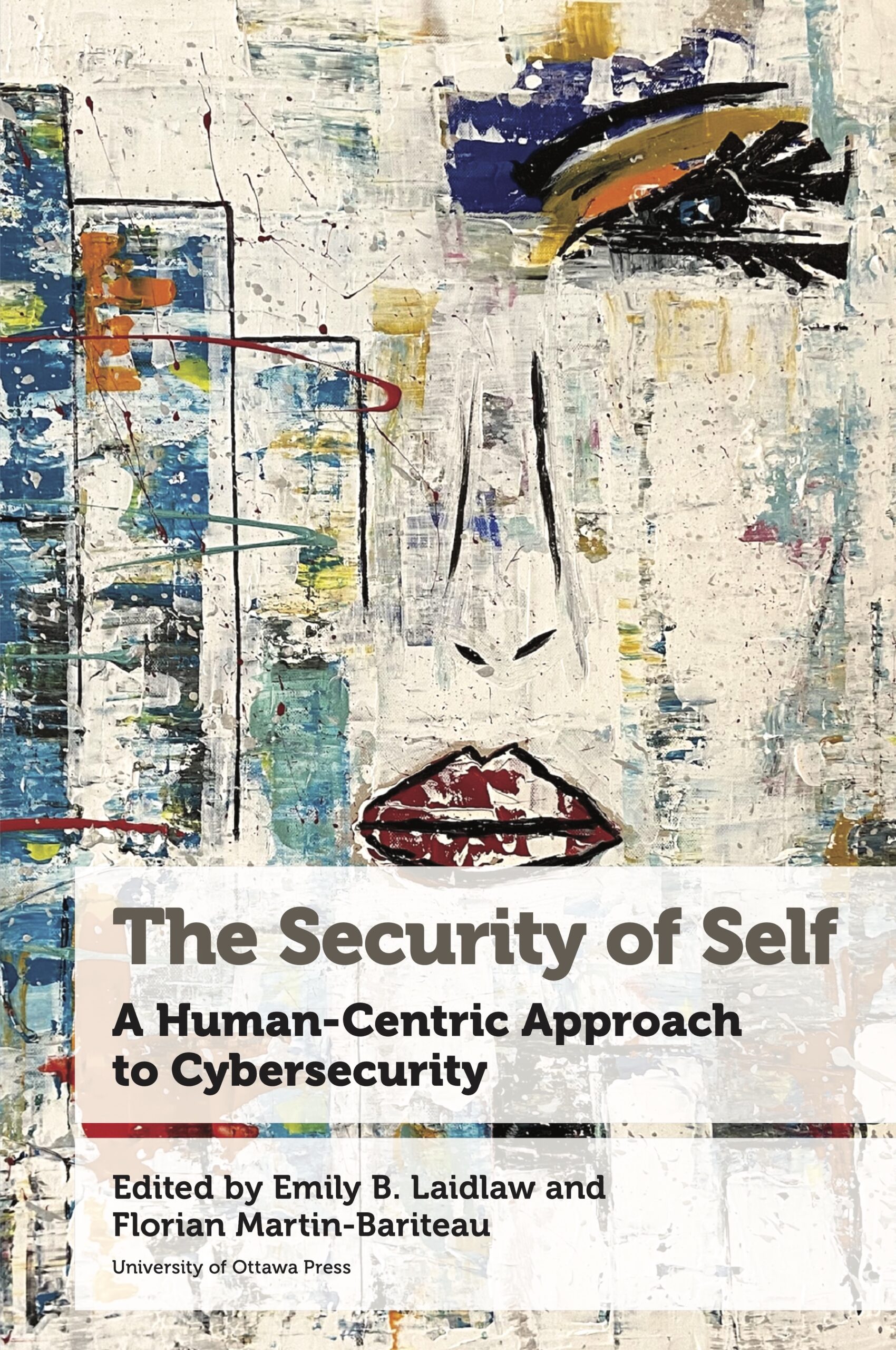
Description: The Security of Self: A Human-Centric Approach to Cybersecurity redefines what it means to be secure in the digital context—placing people at the centre of cybersecurity. Drawing on multidisciplinary expertise, it offers a nuanced exploration of how policy, law, technology, and human behaviour intersect to shape the future of cybersecurity.
Rather than only examine the concept through the lens of national security and organizational risks, as it often is, the authors explore a new human-centric approach to cybersecurity: the security of self. This perspective invites a paradigm shift where the core purpose is to protect people—and society—from harm, and where individual and collective rights define what it means to provide a safe cyber environment.
With a distinct Canadian focus and case studies spanning the Internet of Things, artificial intelligence, virtual reality and social media, the collection charts a path forward for cybersecurity, grounded in law, policy, and practices that advance the security of self. It will be a valuable resource for researchers, policymakers, regulators, and individuals seeking to understand and shape the future of human-centric cybersecurity.
Order the Paperback Copy Here
Download the open access PDF Here
Title: Dirty Money: Financial Crime in Canada
Edited By: Christian Leuprecht & Jamie Ferrill
Description: Uncovering the hidden flows of dirty money into, out of, and throughout Canada.
Financial crime in Canada remains a mystery: omnipresent, but we know little about its operation. Transactions are cloaked with apparent legality, which makes tracking criminal activity through economic or financial statistics a complex undertaking.
This distinctive volume aims to stem in-, out-, and through-flows of vast sums of dirty money by enhancing Canada’s capacity to detect, disrupt, deter, investigate, and prosecute domestic financial criminals and transnational organized criminal organizations. It brings together leading scholars and practitioners from the public and private sectors to identify and explore deficiencies in federal and provincial policy, regulation, legislation, politics, institutions, and enforcement, as well as the international financial crime regime. Together contributors pinpoint weaknesses that have turned the Canadian federation into a destination of choice for global financial crime, where its perpetrators can operate with impunity.
Dirty Money reveals how globalization and technology have spun an extensive web of clandestine processes that disguises how financial criminals operate, the channels they use, and how they suborn banks and institutions. In the process, the extent of financial crime in Canada and its corrosive effects on communities, democratic institutions, and prosperity becomes apparent.
Contributors: Sanaa Ahmed, John Cassara, Garry Clement, Arthur J. Cockfield, Caroline Dugas, Jamie Ferrill, Cameron Field, Michelle Gallant, Peter German, Rhianna Hamilton, Todd Hataley, Caitlyn Jenkins, Christian Leuprecht, David Maimon, Katarzyna (Kasia) Mcnaughton, Denis Meunier, Pierre-Luc Pomerleau, Stephen Schneider, Jeffrey Simser.
